
What is this virus?
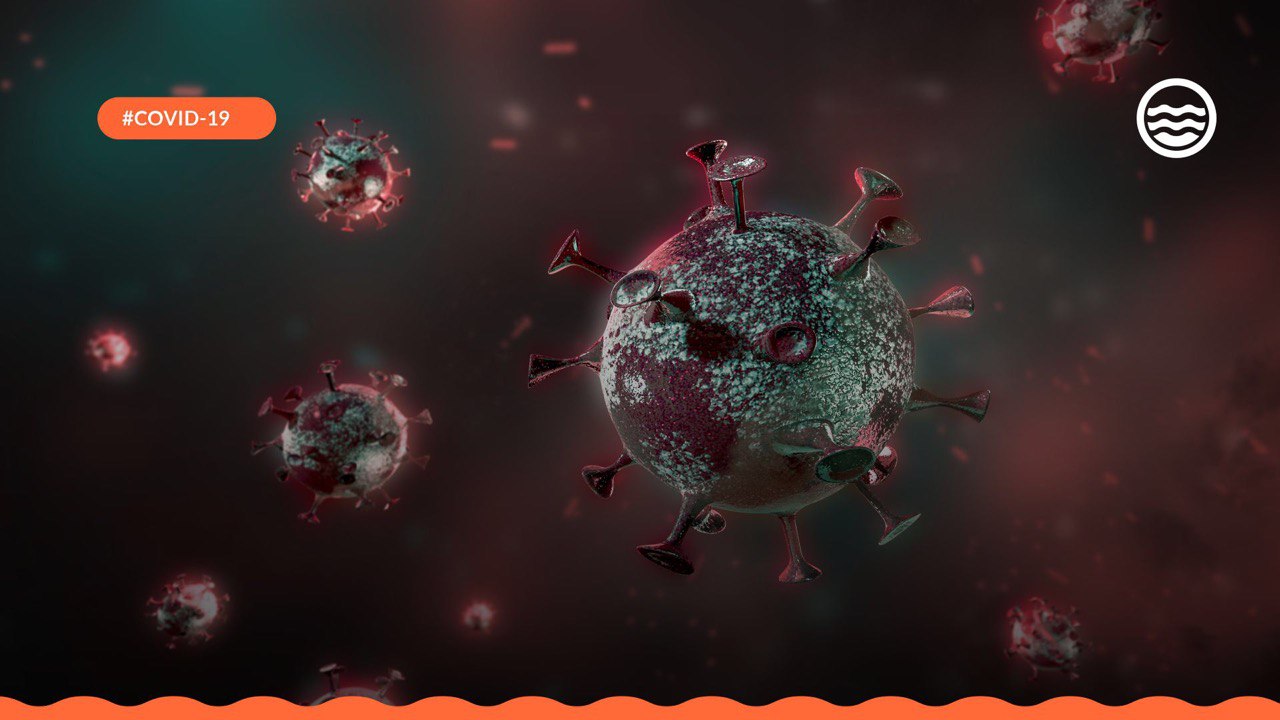
In december 2019, the first case of Covid-19 in Wuhan, China, was reported to the WHO. On the 30th of January the epidemic was declared a public health emergency. The disease’s name is Covid-19 (Coronavirus induced disease) and is caused by the SARS-CoV-2 (severe acute respiratory syndrome coronavirus 2) virus. As of April 24th 2020, 2.6 million people have been infected by the virus.
Coronaviruses are a family of viruses, which include SARS-CoV-1 (epidemic in 2000s) and MERS-CoV. Although it does include some pretty bad epidemics causing viruses, until now, most of them that had contact with humans caused mild colds and coughing. This is why they weren’t very much investigated and we were taken by surprise. This type of virus is mostly found in other animals than humans, and SARS-CoV-2 most probably came from bats. Many sources agree that it is very unlikely this virus was created or modified in a lab, including WHO.
Debunking the myths:
The disease only kills older people: FALSE
The youngest death was an infant, we are all at risk, although it is true that mortality rates shoot up in elderely or people with underlying conditions such as diabetes and hypertension.
If you have COVID-19 you’re going to die: FALSE
The virus will not necessarily kill you. Although the numbers are not certain, the mortality rate is 3.4%. This rate varies according to factors like age and underlying conditions. It’s still not a reason to try to test your immunity.
The virus was created in a lab: FALSE
Nearly all scientists agree that the virus came from an animal. The analysis of the virus’s genome (the code that makes it up) does not allow to affirm that it was lab manipulated, or created, quite the contrary.
5G mobile networks spread the virus: FALSE
Viruses cannot travel on waves, and the epidemic is happening in countries where there is no 5G.
Sunny weather and warm temperatures kill the virus: FALSE
Cold weather kills the virus: FALSE
Countries with warm weather have also reported the virus. For all we know, the virus can exist in all areas.
Drinking alcohol kills the virus: FALSE
Drinking alcohol gets you drunk.
Antibiotics can help if I’m sick: FALSE
Antibiotics are meant to kill bacteria, not viruses. If you are sick it is recommended to call a doctor, and do not take antibiotics without a prescription.
Wearing a mask completely protects me: FALSE
Sadly, there is no complete protection, but the more careful you are the better. Wash your hands and respect social distancing, this reduces chances you get sick.
Here’s more myths debunked by the WHO.
The Virus’s spread Across the Globe
One of the reasons why this virus spread at such a wide scale compared to the two other epidemics could be, according to ebmedicine, that the epidemic happened during the Chinese New Year. This means that there were 15 million tourists in Wuhan that came from many places across the globe, and possibly brought it back home with them.
The epidemic first arose in eastern Asia, and struck China quite severely. The most affected region then became Europe, and now the United States has the most cases and deaths.
The affected countries reacted more or less rapidly, and tried to handle the crisis as best as they could. Indeed, the necessary equipment to handle the situation, be it masks, alcohol-based gels, or ventilators to help patients breathe have not been enough. Many hospitals reach maximum capacity and become forced to choose between two patients when the situation isn’t controlled properly.
The virus is pretty infectious, and the fact that we know little about it makes it hard to determine if an optimal solution exists.
Transmission speed
The virus is mostly transmitted through droplets, or objects (objects that transmit diseases are called fomites) that come in contact with it. It has the ability to survive thirteen hours on plastic and nearly ten hours on steel. This means that contaminated surfaces such as handrails or simple objects can be vectors to the virus. This is why we hear a lot about washing our hands and not touching our face when we are out. Indeed, a simple contact of the virus with your mucous membranes is enough to catch it. It is not easy to determine who is infected or not, as not everyone shows symptoms. However, being asymptomatic doesn’t mean that the pathogen cannot be passed on.
An important tool that was established by scientists to be able to measure how infectious the disease is, is the reproduction rate “R”. This number represents how many new cases will exist for every one case. Let’s take this virus for example, it is estimated that its basic reproduction rate, so when zero measures are taken to prevent the spread, is around 2.5. This means that every infected person will contaminate 2.5 people. To illustrate this here is an image of what a transmission rate of 3 would look like.
Some of you may have noticed that at each step, the number of contaminations is multiplied by three. So according on which level of the tree you are, the first person being level 0, the number of contaminated people will be 3 to the power of the level. For example, let’s say I moved to the 5th level in my reproduction chain, I will have 35 = 243 people contaminated. This is what we call exponential growth. A reproductive rate lower than 1 means that the virus is disappearing.
The reproductive rate can determine how fast an epidemic will spread. However, it can be lowered through measures, such as social distancing, washing your hands, etc.
Preventive measures against SARS-CoV-2:
Whenever these measures are mentioned, the idea of “flattening the curve is too. What do they mean by this? The idea of flattening the curve, means reducing the number of patients at once so that they can be handled by the healthcare system. A “curve” is more or less flat, mostly according to the transmission rate, that can be modified thanks to the aforementioned measures.

These are the measures WHO recommends taking:
- Social distancing allows to reduce human interaction and restrain the infectious rate of the viruses.
- Washing your hands prevents the transmission through touching objects or people that are contaminated, and then catching the virus yourself.
- Coughing or sneezing in your elbows (hands touch many more things) to avoid projecting droplets and contaminating those nearby.
- Reduce on your own your mobility, the more interaction there is, the higher the reproduction rate.
Finally, if you experience any symptoms, it is important to declare them to your healthcare provider, so that they can advise you on the precautionary measures to take to protect others and yourself.
Why testing is important
We heard a lot about testing, and maybe some of you wonder why it is so important to be able to test everyone. Testing allows us to identify the number of contaminations, or to be certain whether the patient is sick or not. Not everyone shows symptoms and there is a limited stock of tests. It is therefore hard to control the real propagation of the virus, as the asymptomatic people can still contaminate others. A study conducted on board the Princess Diamond, a ship that was quarantined because it carried the virus, showed that nearly half of the contaminated population was asymptomatic.
It is impossible to determine who carries the virus or not unless we introduce systematic testing. This would allow some control over the situation, but meanwhile, it is better we stay at home.
Knowing who exactly got sick can also allow more accurate statistics such as the mortality rate, that are key to understanding how this pandemic works.
What are the symptoms of this disease
According to WHO, the most common symptoms are fever, dry cough and tiredness. In some cases nasal congestion, sore throat and diarrhea can be present. The symptoms are usually mild and gradual. It is important to know that most people recover from the disease without needing to go to the hospital. Stay alert, but do not panic.
Everyone can catch the virus and transmit it to others. Although younger people have less mortality rate, it does not mean they are immune to it, nor that they are certain that their case will be light. Many are hospitalized and a portion of those can end up in intensive care.
On a microscopic scale:

The Virus has a surface protein that is called spike glycoprotein (or S-protein). This is what allows it to attach itself to the cells in our body. However, before adhering to our cells, S-proteins need to be primed, which happens with the help of another protein: TMPRSS2. S-protein will bind itself with another protein on the surface of our cells, called ACE2 receptor. The latter is mostly found on alveolic cells, the ones that allow the gas exchange in your lungs. An endocytosis then happens, the virus is “swallowed” by our cells without being destroyed. Once inside the cell, the virus will use the cell’s mechanisms to reproduce itself.
Our immunitary response
The symptoms we experience are a result of our body doing its best to defend itself. Once a stranger is detected by our immunitary cells, there will be an immediate reaction to stop it and fight it. Some of our immune cells release cytokines, a chemical substance, which orchestrate and recruit more cells on the infected spot. In many cases, our body does well, and we get progressively better, until we’re cured. However, in some cases the body goes overboard, and more cytokine than needed is produced. This leads to hyperinflammation, where there are too many cells fighting the virus, and can cause pneumonia. This phenomenon is called a cytokine storm.
Vaccines? / treatments?
Research for an effective treatment or vaccine is still ongoing, however there starts to be promising solutions. It takes time to establish a treatment, as they have to be studied at different scales (lab, humans, and clinical) and be approved by peers before even being commercialised. There are many controversies surrounding certain studies, and it is important when you come across news of a “miracle cure” to look at other sources. Indeed, the success of the experiment can be more or less reliable according to the number of people it was tested on, as well as how random the selection was. There is also a lot of discussion on the risk/benefit balance, as it would be unfortunate to end up harming people more than curing them.
According to Nature, two molecules called remdesivir and chloroquine are promising leads to treatments for this disease. Remdesivir works by inserting a code into virus’ RNA (the equivalent to our DNA, which codes basically its whole life), and provokes early termination of the virus. It seems like it also prevents the infection of our cells. Chloroquine, on the other hand, blocks virus/cell fusion by creating conditions that inhibit it. There exists a variant of chloroquine, called hydroxychloroquine which is less toxic, and therefore is favoured over chloroquine. However they have not been approved yet, and could very well fail the clinical trial. This information was true on April 25th 2020, but it may very well have evolved since then.
The development of a vaccine could potentially take long months, if not years, especially because there exists no vaccine for coronaviruses yet. Different kinds of vaccines are being looked into, but even if a promising lead is found, there is a long testing phase to make sure it is actually safe to use on humans. There also needs to be prepping for mass production of the vaccine, if the virus is still active when it is found, and finally the process of inoculating everyone can take time. The vaccines will probably not come in time for this wave of the epidemic, however, they might be useful if there are other ones.
Impact on economy:
The crisis has strongly impacted many huge companies, there are millions of people whose jobs are at risk. It goes without saying that this pandemic will take a very heavy toll on the world’s economy. Tourism died down as travel bans took place, and many airlines lost a lot of money. Oil’s price has plummeted, and the stock market is experiencing hard times. According to UN Secretary General, Antonio Guterres, the pandemic “attacked the real economy at its core, trades, supply chain, businesses, jobs, entire countries and cities are on lock-down, while borders are closing.”
On the other hand, online services such as video calls, or entertainment platforms have grown significantly, and nitrogen dioxide levels in the air have significantly dropped, improving overall air quality.

What happens next:
The future is very uncertain for now, but many measures are being taken by the WHO to help the crisis as much as possible. They have recently created a knowledge hub that offers multidisciplinary information on COVID-19 for a variety of audiences from policy makers, to responders, to researchers, to educators, to affected communities and the general public. This should allow more progress to be made by uniting efforts and giving knowledge where it is needed. On the 24th of April 2020, WHO has launched another global collaboration to accelerate the development and production of essential health technologies (including vaccines). Initiative like this will allow a more efficient fight against the virus.
Countries will have to lift the lockdown at some point, and their economy won’t be able to handle it for an indeterminate amount of time. However it is hard to predict whether the virus will have disappeared by then. There might be second waves, or other epidemics in the future. One thing is certain, many measures will be taken to prevent another crisis like this. The world is growing more interconnected, which makes us more vulnerable to quicker epidemics. The origin of epidemics is researched upon, and might very well be linked to how we handle other species. To stay informed, I encourage you to check WHO’s website, and their press conferences. As the situation evolves regularly and research is ongoing.