

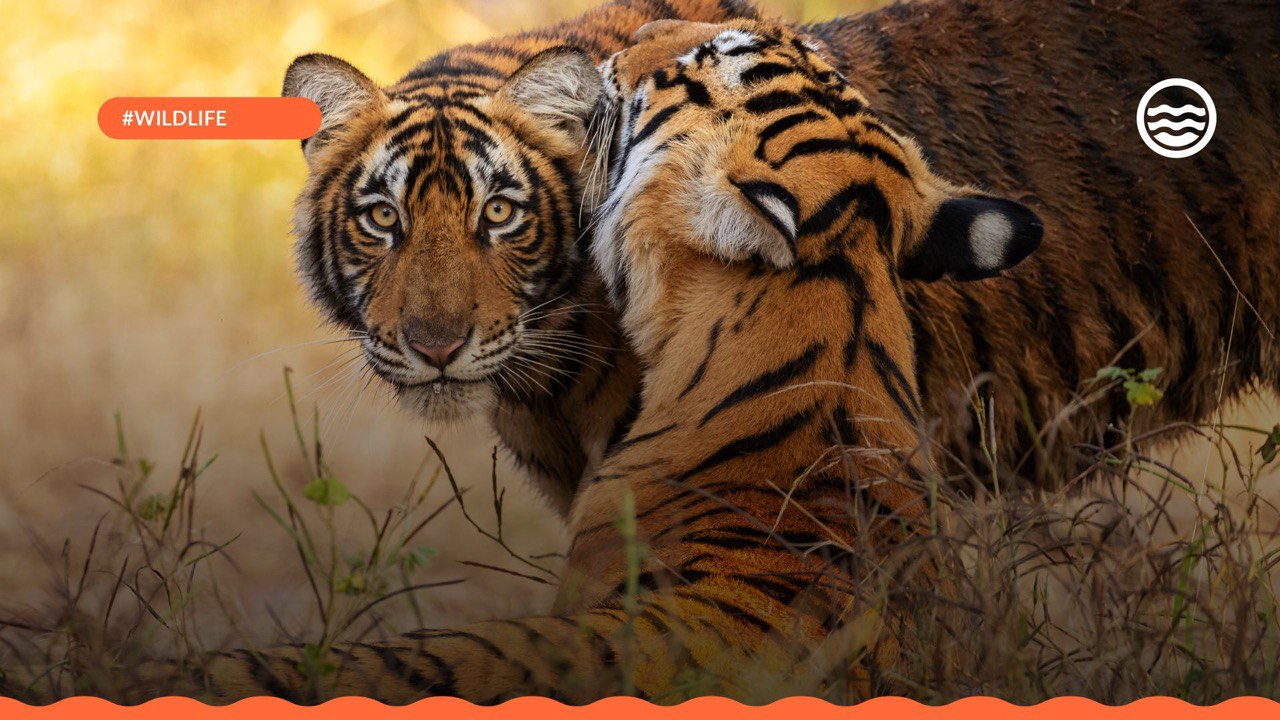

The deep and luscious forests of the Fujian, Guangdong, Hunan and Jiangxi provinces were once home to the South China tiger, a population of the Panthera tigris tigris subspecies native to southern China. However, decades of hunting, habitat destruction and human intervention have led to the near extinction of this subspecies. The only remaining individuals are in captivity in Chinese zoos.
The state of the South China tiger’s population serves as a harsh reminder of the unspeakable acts committed in China from 1950 to 1960 under Mao Zedong’s rule.
It is one of the top ten endangered animals in China, and the International Union for Conservation of Nature (IUCN) has listed it as “critically endangered.”
The IUCN Red List
From its establishment in 1964, the IUCN Red list has evolved and improved, growing into the most comprehensive and reliable source of information on the conservation statuses of animal and plant species.
The IUCN Red list indicates the health of the world’s biodiversity through the range, population size, habitat and ecology, and threats, among other indicators.
Owing to its high risk of extinction in the wild, the South China tiger is deemed ‘Critically Endangered’.
Mao Zedong’s Great Leap Forward

In the early 1950s, Chairman Mao Zedong of the Chinese Communist Party launched the “Great Leap Forward” campaign, with the intent of converting the primarily agrarian economy of China into a communist society.
In “Mao’s War Against Nature: Politics and the Environment in Revolutionary China”, Judith Shapiro writes – “this was an era when human will was considered more powerful than objective scientific law”, and political dogma held that
“the earth could be miraculously transformed through ideologically motivated determination”.
The slogan ‘Humans Must Conquer Nature’ was the defining statement of this era — ‘anti-pest’ campaigns were promoted, involving the uncontrolled hunting of any animals that posed a threat to crops and livestock. Since the tigers posed a ‘threat’ to cattle, they were mercilessly hunted and their reported population of 4000 individuals in the 1950s dropped to 30-40 individuals by 1987.
Habitat Loss

Judith Shapiro further states that Mao had an obsession with boosting production, and hence launched a ‘war against nature’. Fanatic idealism led to the ‘Iron and Steel’ campaign, a scheme to develop and fuel backyard blast furnaces. In order to obtain space for these furnaces, “non-grain crops were destroyed, fruit trees were uprooted, and wetlands were filled in, leading to increased erosion, flooding, desertification, ecosystem imbalance and microclimate changes”.
A military-style campaign was organized on New Year’s Day 1970, with the goal of producing grain fields as quickly as possible. This was carried out by “building dikes, draining water, filling earth and converting roughly 25 square kilometers of wetlands into grain fields”.
The destruction of the environment caused a massive impact on the habitat and existing food chain, resulting in an ecological imbalance.
Furthermore, extensive deforestation and large scale relocation of urban populations to rural areas led to the fragmentation of tiger populations. Ultimately, the destruction of their habitats, constant threats of being hunted and a lack of sustenance led to massively reduced tiger populations and the imminent threat of extinction.
Rewilding

Hope is not lost, and it is almost symbolic that in 2022, the Year of the Tiger, positive change is coming. From its foundation in 2000, ‘Save China’s Tigers’ has aimed to shed light on the dire situation the South China Tigers are facing through education, experimentation, and advanced conservation models in China and around the world.
Save China’s Tigers refers to ‘rewilding’ as a “process by which captive-born tigers learn to survive on their own in large natural enclosures and then are eventually returned to a protected natural environment”. The tigers are moved between enclosures and are monitored by researchers. Since the remaining tiger population has grown in zoos, they are overly dependent on the environment in their enclosures and lack the capability to be self-sustaining predators. In order to return to the jungle, they must learn to hunt and fend for themselves. According to protocol, “if a tiger fails to hunt successfully within a set number of days it will be given food so as to maintain its condition”. Second and third generation cubs are now learning to hunt from their rewilded first generation mothers.
The rewilding process has been taking place at the Laohu Valley Reserve in South Africa, a 350-square-kilometer reserve. The tigers are trained to possess all the skills necessary to survive in the wild, and so far, it seems that the tigers of the project are successfully capable of hunting and surviving on their own.
Critically endangered species like the South China tiger are being brought back from the brink of vanishing from the face of the Earth, thanks to strategies like rewilding. Being able to restore wild populations through the reintroduction of once-captive animals can help save these species, while reducing inbreeding and hence producing a healthy population once again.
At LEARNBLUE, we aim to spread awareness on current and relevant issues. This study on the South China tiger is in line with Life on Land and Responsible Consumption and Production, two of the Sustainable Development Goals (SDGs) created by the United Nations. Furthermore, it is intended to serve as a reminder of the impact human action has on the biodiversity around us. We can learn from the mistakes of our predecessors, and educate our current generations on how we can do better.